Can your deck be resurfaced?
An overlay bonds to the concrete under it, so it's only as good as that slab. Resurfacing is a good fit when:
- The slabs are level with each other and with the coping, with no lips or dips.
- Cracks are hairline or shallow, not wide or growing.
- The problem is looks: faded color, worn texture, stains, rust marks or old peeling paint.
- The surface is rough on feet or has gone slick where an old sealer wore to a shine.
If the deck has heaved, dropped or cracked through, an overlay will crack right along with it. That deck needs replacement. We'll tell you honestly which one yours is.
What we can do to a sound deck
Resurfacing overlay
A thin polymer-modified cement layer that covers wear, patches and stains and gives a fresh, uniform surface.
Textured or stamped overlay
The overlay can take a knockdown texture or a light stone stamp, which grips better underfoot than smooth concrete.
Stain and color
A new color, or a two-tone look with a border band around the coping. Lighter tones stay cooler in full sun.
Clean and reseal
If the deck just looks tired, a deep clean and a new low-sheen sealer with grip may be all it needs.
How a resurfacing job goes
Clean and profile
We pressure wash and grind or etch the old surface so the overlay has something to grab.
Repair
Cracks and chips are filled, and the joint along the coping is cut clean for new sealant.
Overlay and texture
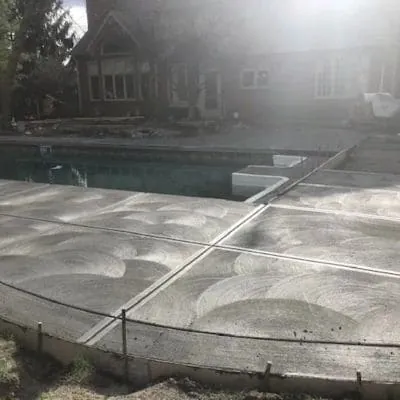
The overlay goes down and is textured or stamped while it's workable.
Color and seal
Stain goes on, then a sealer with grip. The coping joint gets a flexible sealant.
Living with the new surface
Keep pool chemicals off the deck when you're adding them, rinse splash-out now and then, and plan on resealing every few years. Chlorine and sun are what wear a sealer down; when water stops beading up, it's time. A resealed deck keeps its color much longer than one that's left bare.
We do deck resurfacing across Fishers, Carmel and the rest of the towns we cover.