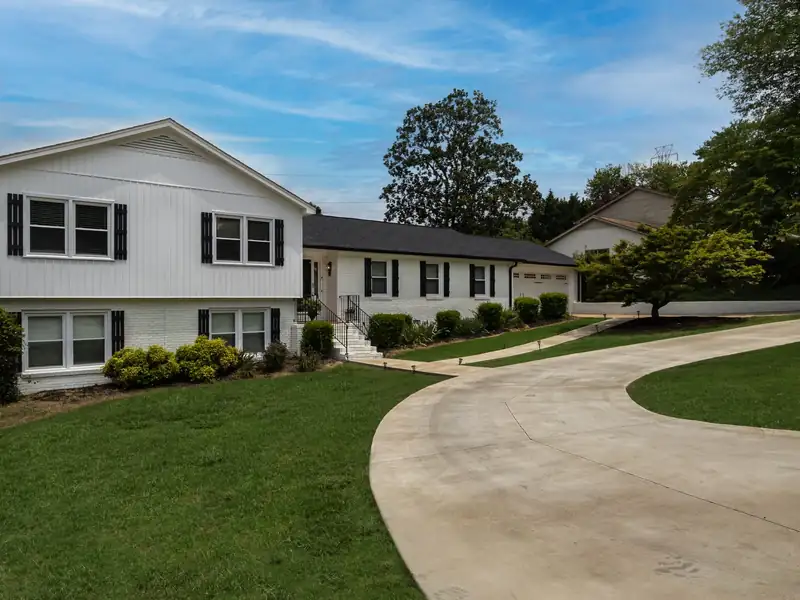
Walks that go where people actually walk
The best walk follows the path people already wear into the grass. Before we set forms, we look at how you get from the drive to the door, from the back door to the patio, and from the gate to the trash cans, and lay the walk along those lines. A walk that makes people cut a corner ends up with a dirt shortcut beside it.
- Front walks. Wide enough for two people side by side, with a gentle curve or a straight shot, whichever suits the house.
- Side-yard paths. A clean route to the backyard, the gate or the garden that keeps mud off the patio.
- Patio connectors. A walk from the driveway or the back door to a new stamped patio, stamped to match.
Every walk gets a compacted base and a slight cross-slope so rain runs off instead of sitting in puddles or freezing into an ice sheet on the path to your door.
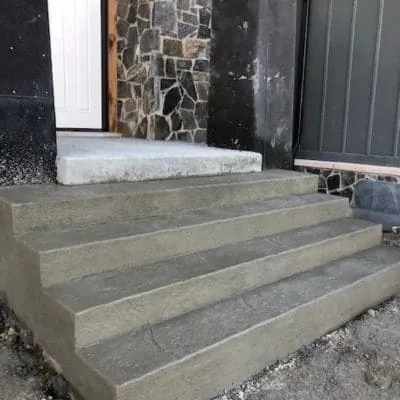
Poured concrete steps
Where the walk meets the porch or climbs a grade, we form and pour steps in place. Even risers and deep treads are what make steps feel safe, and a broom or textured finish keeps them from getting slick in rain or frost. Old steps that have pulled away from the house or cracked through usually need to be torn out and poured new on a footing that won't move.
Plain, stamped or somewhere in between
Broom finish
The classic walk: clean edges, a swept texture that grips, and tooled joints.
Stamped and colored
Slate, stone or brick texture that matches a patio or porch floor.
Plain field, stamped border
A broom-finished walk framed by a stamped band. Dresses it up for less.
Curves
Flexible forms let the walk bend around beds and trees instead of cutting across them.
We pour walks and steps all over Noblesville and Zionsville, and can pour them in the same trip as a new driveway.