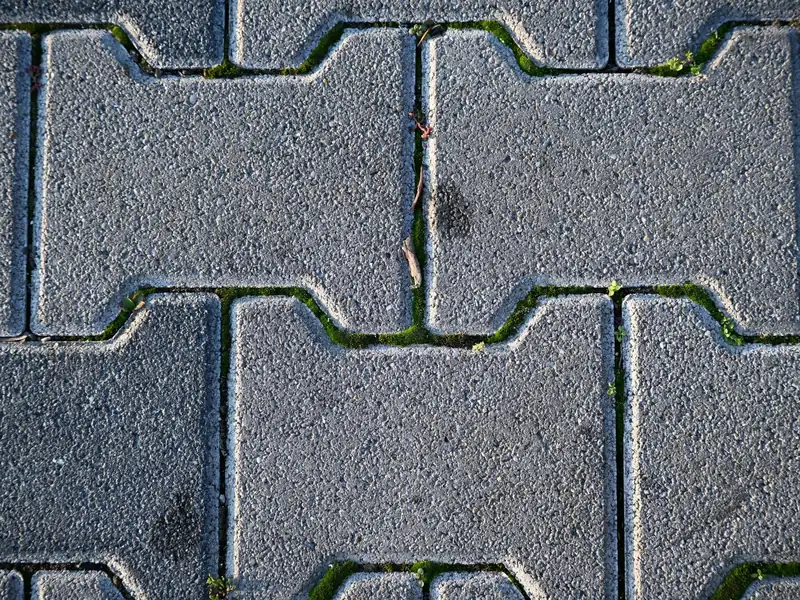
Side by side
| Stamped concrete | Pavers | |
|---|---|---|
| Up-front cost | Usually less per square foot for a similar look | Usually more; each unit is set by hand |
| Weeds and ants | No joints for weeds to grow in | Sand joints can sprout weeds and host ants unless polymeric sand is kept up |
| Routine upkeep | Clean and reseal every few years | Re-sand joints, pull weeds, reset any units that settle |
| Cracking | Can crack; control joints put the cracks where you won't notice | Joints flex, so single units don't crack from the slab moving |
| Repairs | A patch rarely matches exactly | Pull up and reset the affected pavers |
| Access under it | Plan lines and sleeves before the pour | Can be lifted and relaid for a utility repair |
| Look | Continuous stone texture with color and a border | Crisp individual units in many shapes and colors |
How each handles an Indiana winter
Most of Hamilton County sits on slow-draining glacial till: the federal soil survey maps Crosby, Brookston and Miami soils across most of the county, all of which hold water in winter and spring. Indiana's building code rates the county "severe" for weathering and puts the frost depth at 30 inches. That's a lot of freeze and thaw pushing on whatever is on top.
Both surfaces handle it if the base is built right, and both fail if it isn't. Pavers move a little with the ground and can be reset. A concrete slab resists movement as one piece, and control joints let it crack in straight, planned lines when it shrinks. Where either one goes wrong is the same place: fill that wasn't compacted, water running under from a downspout, or no slope to shed rain. That's why the base gets more attention than the stamp.
Salt matters too. Rock salt is hard on any new concrete surface, and sealed stamped concrete holds up far better than bare concrete. Pavers shrug off salt better but get stained by it.
When pavers are the better call
- There are buried utilities under the patio area that may need to be dug up someday.
- You want a crisp, modular look that stamping can't imitate, like large-format slabs with open joints.
- You're fine with re-sanding joints and pulling the odd weed in exchange for easy spot repairs.
When stamped concrete makes more sense
- You want the stone look without joints to weed, re-sand or reset.
- The budget is set and you want the most square footage for it.
- You want the patio, a fire pit circle and the walks to all match in one color and pattern.
- The patio is by a pool, where a textured, sealed slab with no joints to shift is easier to keep clean.
Want to see it on your yard?
We bring pattern mats and color chips to every estimate. See the options on our stamped concrete patio page, or look at a stamped slate porch we poured.
We pour stamped patios in Noblesville, Fishers, Carmel and the rest of our area.