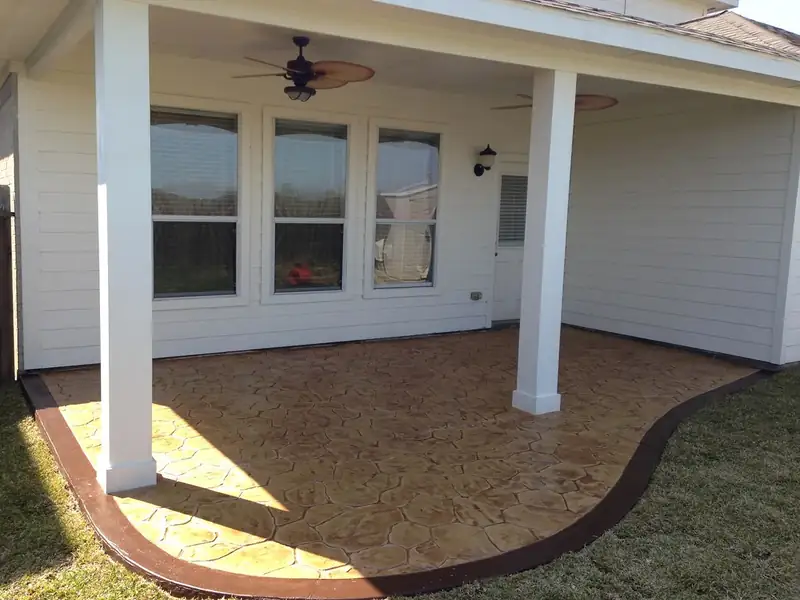
 Example photo:
 Patterns that pass for stone
Stamping is done while the concrete is still plastic. After the slab is placed and floated, we lay textured mats across the surface in sequence and press them in, so the pattern runs continuous from one edge of the patio to the other. The mats are molded from real stone and brick, which is why a good stamp job shows the chisel marks and the uneven face of the rock, not a smooth fake.
The patterns people pick most around Noblesville:
- Ashlar slate. Rectangles and squares of different sizes laid in a running pattern. It reads like a cut flagstone terrace and suits both newer subdivision homes and older brick houses.
- Random stone or flagstone. Irregular shapes with deep joints. It looks more natural next to landscaping beds and a fire pit.
- Cobble and European fan. Small stones in rows or arcs, often used as a border band rather than the whole field.
- Brick and herringbone. A clean choice for a border, a walkway that leads to the patio, or a porch floor.
- Texture only. No joints at all, just a stone surface, for people who want the grip and look of stone without a pattern.
Many stamped patios mix two of these: a slate field with a brick or smooth border that frames it. The border also gives the saw-cut control joints somewhere to hide.
Color, release and sealer
Color goes in two layers. The base color is mixed into the concrete or broadcast onto the surface as a hardener, so the whole top of the slab carries the color instead of a coat that can wear through. The accent color comes from a release powder or liquid that keeps the mats from sticking and settles into the low spots of the texture. When it's washed off, it leaves the darker tones in the joints and grain that make the stone look real.
Once the slab has cured, we seal it. The sealer deepens the color, keeps stains from soaking in, and protects the surface through freeze and thaw. We'll talk sheen with you: a high gloss looks rich but gets slick when wet, so around a grill, steps or anything that sees water, a lower sheen with a grip additive is the better call.
What goes under it matters more than the stamp
When a patio fails, it almost always fails from underneath: it was poured on fill that settled, too close to a downspout, or without enough slope to shed water. Indiana ground freezes and thaws all winter, and water trapped under a slab lifts it.
So the job starts with digging out, compacting a stone base, and setting forms with a slight fall away from the house so rain runs off the patio instead of back toward the foundation. Where the patio meets a door threshold or the house, we set the height so water can't sit against the siding. We cut control joints on a spacing that fits the pattern, so any shrinkage crack lands in a joint instead of across a stone.
Planning a fire pit or seating wall too?
Pour it all in the same job. The ring and the wall sit on the same prepared base as the patio, so everything stays level with each other. See fire pits with sitting walls or how we plan a whole outdoor living space.
How we pour a stamped patio
Walk the yard and pick the look
We measure, check the slope, and go over patterns and colors on your actual yard, not a brochure.
Tear out and build the base
Old concrete or sod comes out, then a compacted stone base goes in and the forms are set to grade.
Pour, color and stamp
The concrete is placed and colored, the release goes down, and the mats are pressed in while it's workable.
Wash, cut and cure
We wash off the release, saw the control joints, and let the slab cure before any sealer goes on.
Seal it
The sealer brings out the color and protects the surface. You can walk on it within a day or two and set furniture out after about a week.
Keeping it looking new
A stamped patio asks for very little. Sweep it, rinse it, and plan on resealing every few years or when water stops beading on the surface. Skip rock salt, especially the first winter; it can pit the surface of any new concrete. If the color looks chalky or cloudy after a few seasons, that's the sealer wearing, not the concrete, and a clean and reseal brings it back.
The color faded
Usually worn sealer. A cleaning and a fresh coat brings the depth back.
A crack appeared
Shrinkage cracks belong in the control joints. A crack across the field usually points to the base.
It's slick when wet
Too much gloss. A lower-sheen sealer with a grip additive fixes it.
The surface is flaking
Often salt or water damage on an unsealed slab. Catching it early saves the patio.
Still weighing it against pavers? We wrote up an honest side-by-side: stamped concrete vs. pavers for an Indiana yard. We pour stamped patios around Noblesville, Fishers and the rest of Hamilton County.